

Welcome to TIPHS
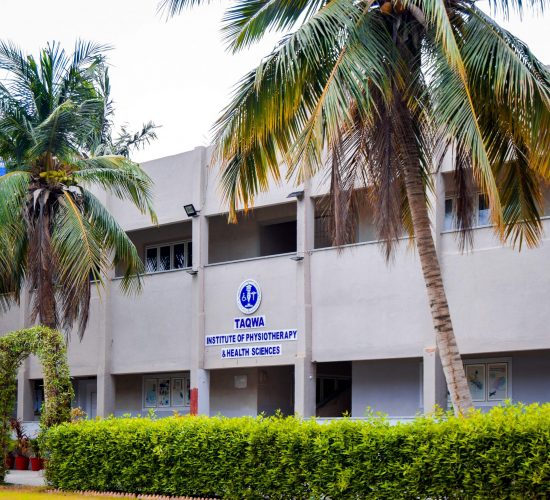
Taqwa Institute of Physiotherapy and Health Sciences (Affiliated with University Of Karachi) is a State of the art institute that provides a unique transformation of learning and education for deserving and merit-based students.
Taqwa Institute of Physiotherapy and Health Sciences (TIPHS) is a project of Senior Academic members in Collaboration with Legendary personate to build the Education and Learning System for Students in Rehabilitation Sciences. The vision of this institute is to promote quality education in Pakistan by bringing new, valuable, and practical disciplines that will enable health care provider’s progress in the field of rehabilitation medicine.
TIPHS is committed to facilitate and provide quality education and clinical training to its graduates being a proud part of University of Karachi
We Welcome to all Fsc. Pre-Medical students for this unique opportunity.
Rehabilitation Sciences: A Growth Industry
Rehabilitation Sciences is an interdisciplinary field that focuses on human function and disability and serves as an essential segment of modern health care system. It focuses on assessment and evaluation of functional and structural disorders related to musculoskeletal, neurological, cardiovascular & respiratory systems. Basic and applied research in the field of rehabilitation sciences is directed towards enhancing physical and psycho-social functioning, participation in life situations and quality of life of people with disabilities by using non-invasive methods of treatment based on manual therapy, electrotherapy and occupational therapy. Hence, rehabilitation sciences cover basic parameters of healing that includes prevention, promotion, diagnosis, rehabilitation and cure.
Physical Therapy: A Science of Healing & Art of Caring
Doctor of Physical Therapy (DPT)
Doctor of Physical Therapy (DPT) is a five year Degree Program spread over 10 semesters. The initial two years mainly comprise of basic education of medical and physical therapy sciences. The next three years comprise of special courses related to medical, physical therapy and rehabilitation related treatment methods and clinical rotations and practices.
It deals with methods of treatment based on movement, manual therapy, physical agents and therapeutic modalities to relieve the pain and other complications. TIPHS aims to produce competent rehabilitation professionals capable of conducting independent clinical Practice & Research in the noble field of Physical Therapy. The program offers curriculum that integrates theoretical and applied sciences through an evidence-based approach to healthcare management. The main objective of the DPT programmed is to produce highly Skilled Physical Therapy Professionals who will take up the ever burgeoning load of the Disabled Community and who are at par with the best professionals in the world and also to promote the development of students’ scientific knowledge, psychomotor skills, professional values, attitudes and behaviors. TIPHS promotes critical thinking and inquiry to foster an environment of research and academic learning in its students. Its programs have been designed to meet the growing demands of the populace in rehabilitating the patients suffering from injuries and disabilities.
Expected Program Outcomes of the Department of Physical Therapy
Faculty, students, and graduates will be professionally active in addressing health and wellness issues of all members of society through pro bono service and advocacy.
Faculty will display skills in teaching, service, and on going scholarly record consistent with expectations put forth by the commission on Accreditation in Physical Therapy Education.
Faculty, students, and graduates will engage in preventative health and wellness activities to demonstrate the important roles physical therapists play in this arena.
Faculty, students and graduates will display professional behaviors in all of their professional activities.
Graduates and therapists associated with the program will be able to integrate scientific inquiry, clinical reasoning, technical skill, and social responsibility into the practice of physical therapy.
Graduates will be able to autonomously examine and evaluate clients and patients, establish a physical therapy diagnosis and prognosis for patients, provide client and patient education, communicate, collaborate, and refer to other professionals, and manage the health care plan of clients and patients consistent with the direct access system of health care. Graduates will be prepared to work in a wide variety of settings and roles as clinicians, consultants, educators, researchers and administrators.
Graduates will be prepared to work in a wide variety of settings and roles as clinicians, consultants, educators, researchers and administrators.
Graduates will focus their efforts on helping clients and patients to achieve specific functional outcomes in order to live richer,happier and more productive life.
Graduates will be able to organize and carry out health promotion, wellness and prevention programs in their communities.
Graduates and therapists associated with the program will be able to enhance and extend the practice of physical therapy by developing new and better approaches to treating patients problems.
Graduates and therapists associated with the program will be prepared to be the leaders not only in the clinical practice of physical therapy, but also in physical therapy education, research and the development of public policy.
Graduates will advocate for social change both within the health care system and in a society a s a whole.
Graduates will be prepare to work in a difficult and challenging environments with underserved patient population
Graduates will be prepare for a lifetime of self-directed learning and professional development The program will provide programming and consult with professionals, health care institutions, and individuals in educational, research, and service- related activities.